Figure spec check

Check a figure against journal specs before you submit

Pick a target journal profile, then choose your figure. The check runs entirely in your browser: the file is never uploaded, no image is generated, no credits are spent and no account is needed. You get a line-by-line report of what the file actually contains, plus a separate list of the rules a browser cannot measure.

저널 규격 검사

투고할 그림을 끌어다 놓고 대상 저널의 공개 요구 사항을 항목별로 확인하세요: 형식, 픽셀, 종횡비, 해상도, 인쇄 크기.

전체 처리 과정이 브라우저에서 완료됩니다. 이미지는 이 페이지에서 직접 디코딩되며, 업로드되지 않고 저장되지 않으며, 서버로 전송되지 않습니다. 미발표 또는 보안 유지 중인 그림도 안심하고 사용할 수 있습니다. 탭을 닫으면 모든 것이 사라집니다.

이미지를 여기에 끌어다 놓거나 클릭하여 선택

PNG, JPEG, TIFF, WebP 지원 — 로컬에서 읽으며 업로드되지 않습니다

직접 확인해야 할 항목

검사 안 함

다음 항목은 브라우저가 픽셀에서 측정할 수 없으므로 이 페이지에서 검사하지 않으며 '통과'를 표시하지 않습니다. 이미지를 내보낸 소프트웨어로 돌아가 각 항목을 확인하십시오.

  • 최소 글꼴 크기

    저널은 일반적으로 인쇄 크기에서 글꼴 크기가 5–7pt 이상이 되도록 요구합니다. 화면 표시 크기가 아닌 최종 인쇄 크기로 측정하십시오.

  • 선 두께

    화면에서 정상적으로 보이는 가는 선은 인쇄 시 사라질 수 있습니다. 대부분의 사양은 최종 크기에서 약 0.25pt 이상을 요구합니다.

  • 색상 모드 (RGB 또는 CMYK)

    브라우저는 파일의 ICC 의도를 읽을 수 없으므로 RGB와 CMYK는 여기서 구분되지 않습니다. 저널이 CMYK로 인쇄하는 경우 내보내기 설정에서 확인하십시오.

  • 글꼴 포함 여부

    벡터 파일(PDF, EPS, AI)에만 해당됩니다. 글꼴이 포함되지 않으면 출판사에서 대체되어 모든 레이블이 잘못 배치됩니다.

  • 흑백 인쇄 후에도 구분 가능한지

    이 이미지가 흑백으로 인쇄될 가능성이 있다면 색상을 제거한 후에도 각 범주가 구분되는지 확인하십시오. 명도, 질감 또는 직접 라벨링을 통해 확인하십시오.

이 숫자의 출처

출판사 자체 저자 지침에서 가져왔습니다. 사양은 변경될 수 있습니다. 투고 전에 링크를 열고 최신 버전과 다시 대조하십시오.

크기
Minimum 1328 × 531 px; keep the same 500:200 ratio for larger images
해상도
Minimum 300 dpi
비고
Preferred files include TIFF, EPS, PDF, or MS Office; avoid unnecessary whitespace.
Elsevier graphical abstract guide

Multiple AI models

GPT Image 2, Nano Banana, Seedream 5, Flux 2 Pro and more — pick the right one per figure.

Up to 4K export

Render at 1K, 2K or 4K for print-ready manuscript output.

Text & sketch to figure

Start from a prompt, or refine a rough hand-drawn sketch.

Free to start

Free account in seconds — every figure is saved to your private history.

Figure spec check

What the report looks like

Screenshots of the checker itself, not generated artwork. The values shown come from one example file; your own report depends on the file you choose and the profile you select.

How the check works

Measured facts first, unmeasurable rules kept separate

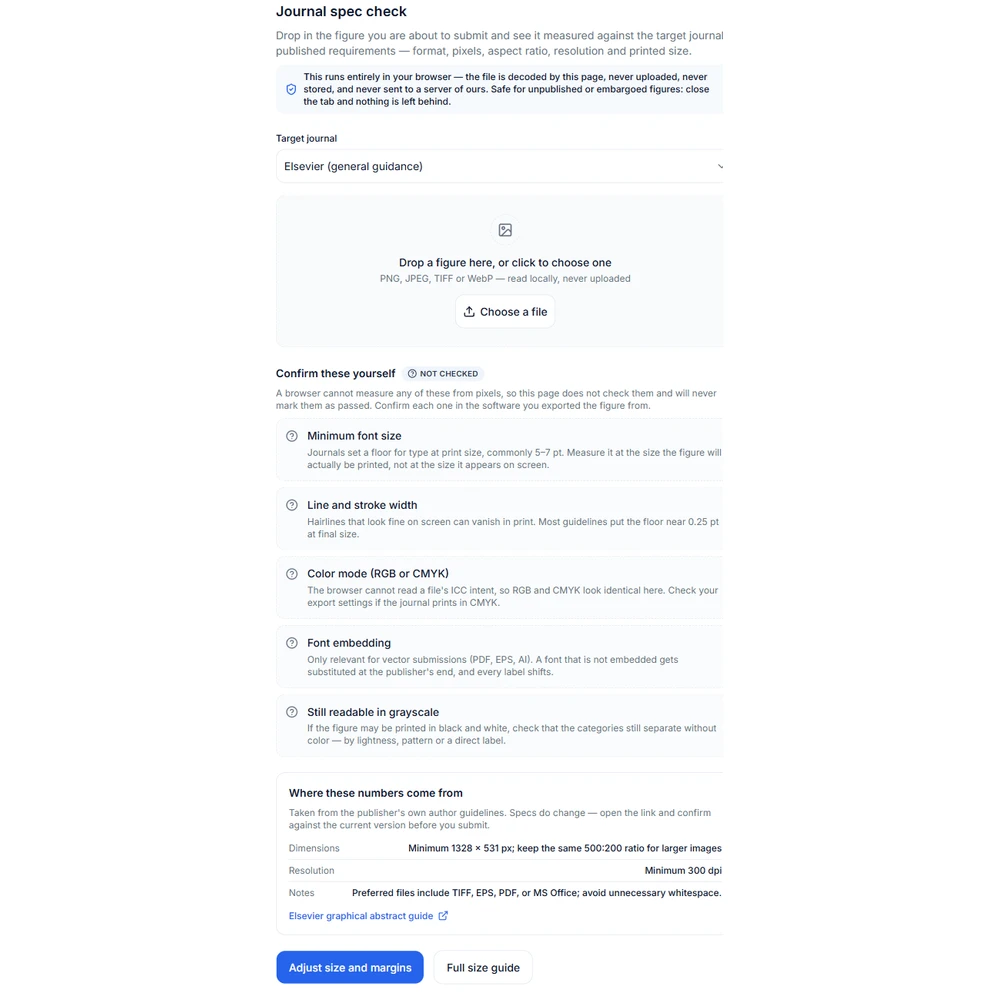
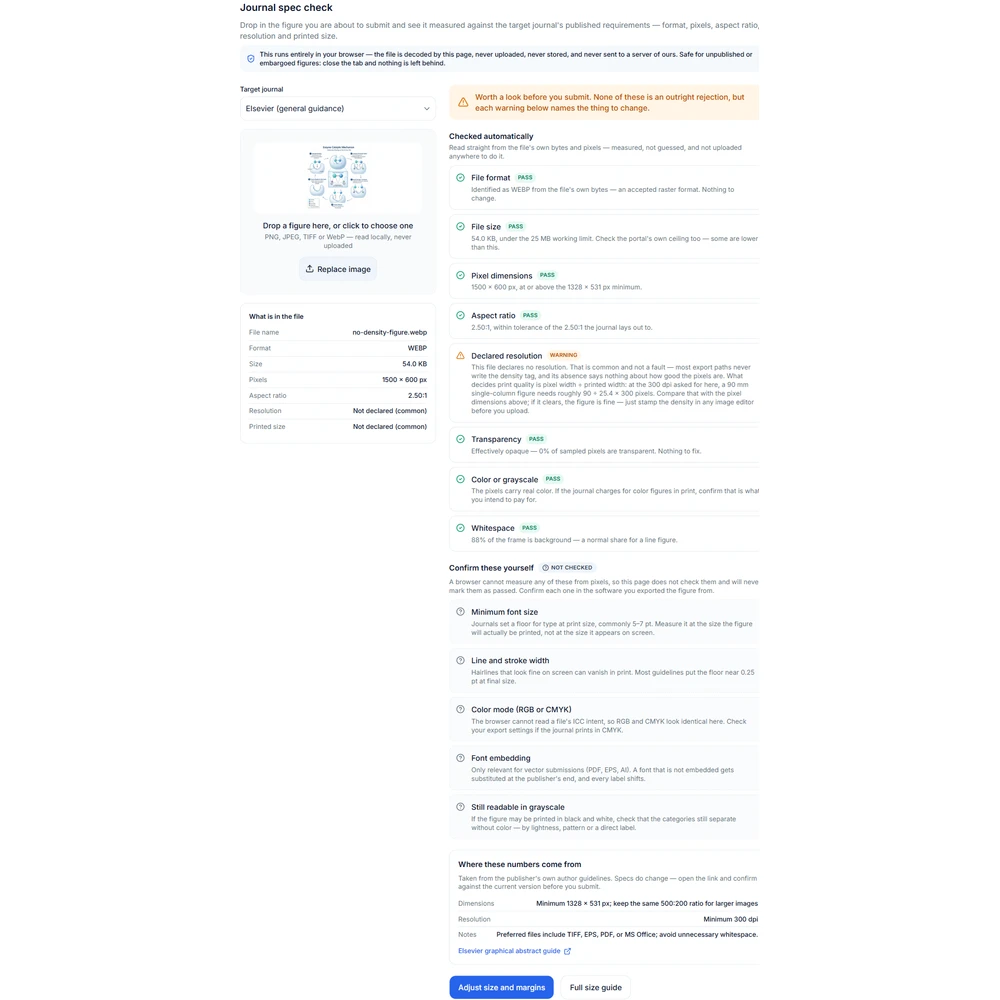
Figure spec check report showing warnings on resolution and aspect ratio1

What the browser can actually measure

The file is read as bytes and decoded locally. Pixel dimensions, aspect ratio and file size are exact. The format comes from the leading bytes rather than the filename, so a PNG renamed to .tif is still reported as a PNG. Color and transparency are answered statistically from a downsampled copy, which is enough for a yes-or-no question and keeps a very large file from filling a browser tab.

  • Pixel width and height, and the aspect ratio they imply
  • File format read from the leading bytes, not the extension
  • File size against a soft submission-portal ceiling
  • Declared resolution, and the physical size derived from it
  • Whether any pixels are transparent
  • Whether the artwork is effectively grayscale
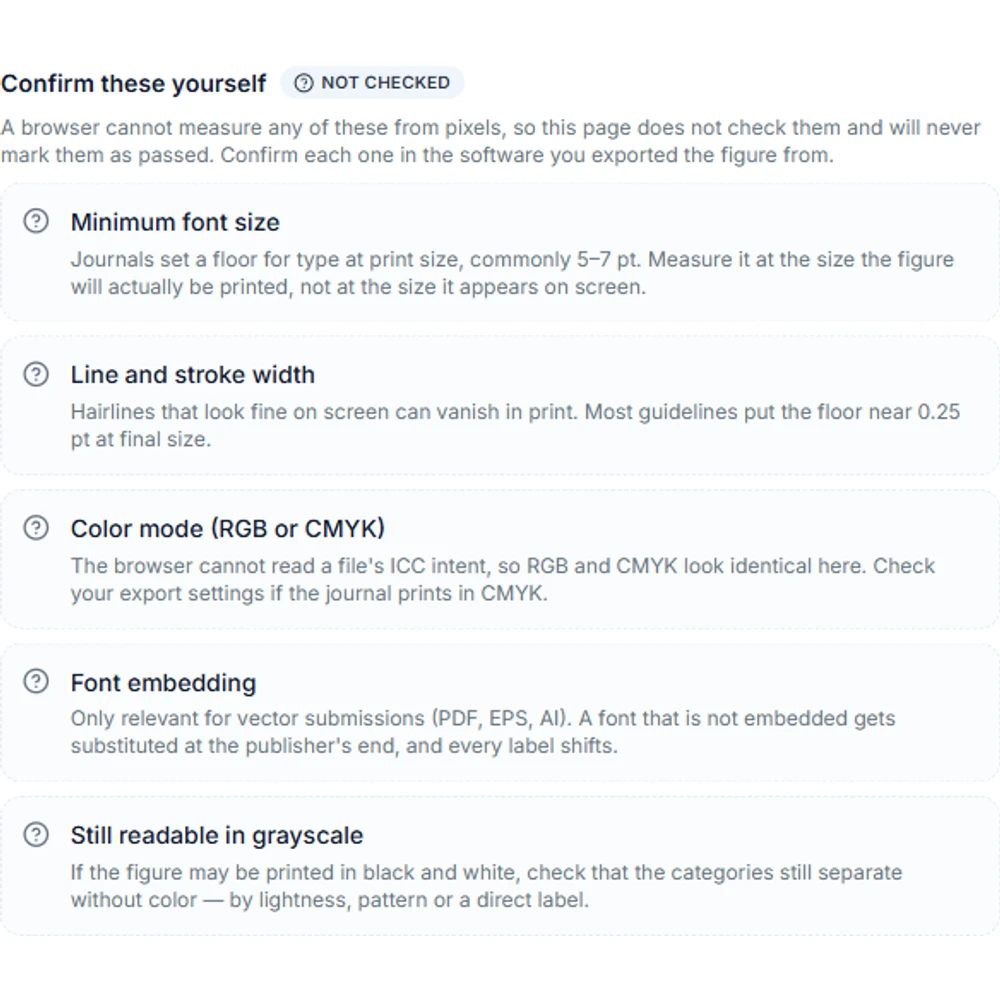
Confirm-by-hand group listing font size, stroke width, color mode, font embedding and grayscale print2

What it cannot measure, and says so

A raster image does not carry the information some submission rules need, so those rules are listed in a separate confirm-by-hand group instead of being marked green. Nothing in that group has been evaluated. Reading a green report as though it had cleared them is the one way this tool could send a figure to a desk reject with the author believing it had been checked.

  • Minimum font size — needs text recognition plus a physical conversion
  • Stroke width — the same problem, measured against the printed width
  • CMYK or color intent — the browser cannot read ICC rendering intent
  • Font embedding — a property of PDF and EPS artwork, not of pixels
  • Whether categories stay distinguishable after a grayscale print
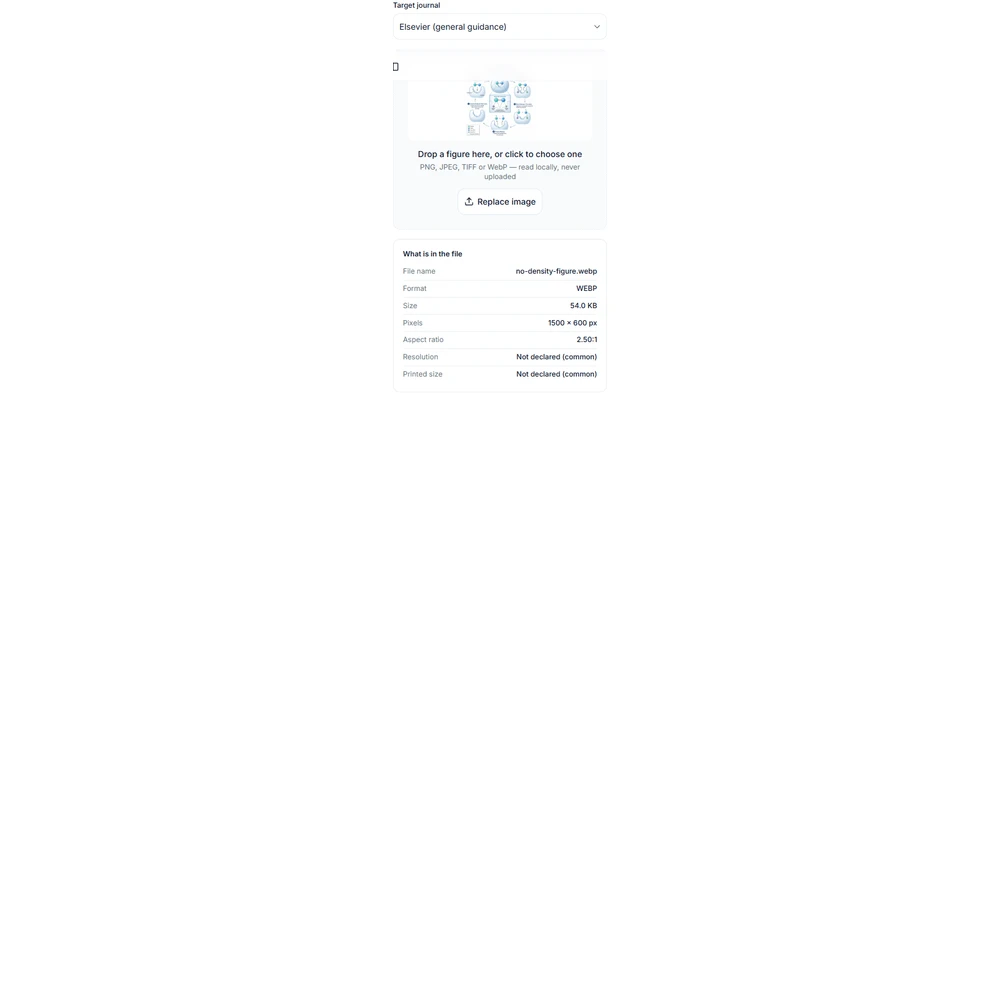
Measured facts panel showing format, file size, pixel dimensions, aspect ratio and declared dpi3

A missing resolution is not a broken figure

Plenty of export paths never write a density tag, so the report often shows no declared dpi. That is a warning, not a failure, and it says nothing about whether the pixels are good enough. What decides print quality is pixel width divided by printed width in inches. A figure with no declared dpi and a generous pixel width is usually fine; one that declares 300 dpi but has few pixels is not. When a journal asks for a density value, set it in your export tool and check again.

  • Confirm dimensions, file format, and resolution
  • Review the target venue's AI-use policy
  • Complete a final expert review before use
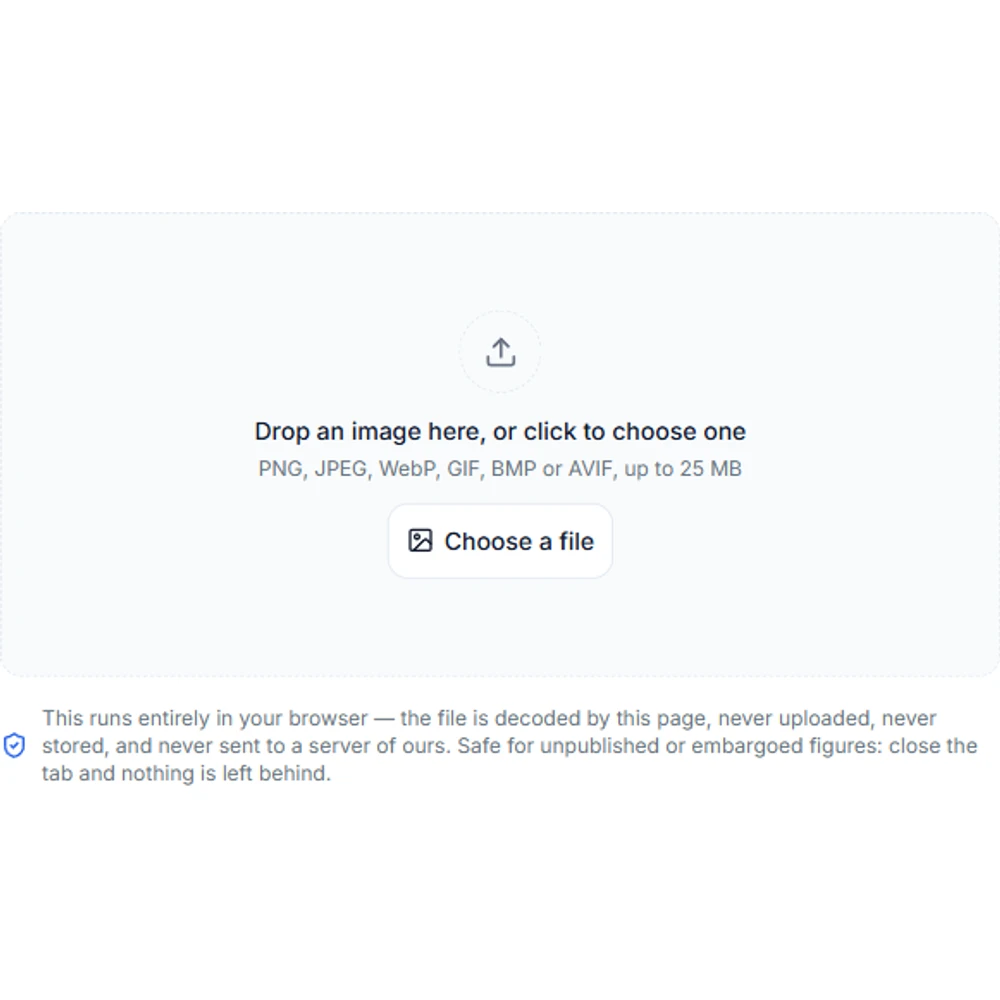
Figure spec check upload panel with a drop zone and a note that the file stays in the browser4

Where the journal numbers come from

Each profile is derived from the publisher requirements table on the graphical abstract size guide, which carries the official source link for every row. This page deliberately keeps no second copy of those numbers — a spec checker quietly enforcing last year’s rule is worse than none. Open the guide to read the requirement in the publisher’s own wording, and follow the source link before you rely on it.

  • Profiles are generated from the guide table, not typed in twice
  • Every report links back to the publisher source for the selected profile
  • A profile whose source row changes is dropped rather than guessed at

A pre-submission cross-check, not the journal rulebook

This report compares one file with one stored profile. It cannot see the current author guidelines for your journal, its production requirements, the rules for your specific article type, or any instruction an editor has given you. Requirements are revised and they differ between journals from the same publisher. Treat the report as a cross-check to run before submission, and confirm every item against the official author guidelines for the journal you are submitting to.

Figure spec check questions

Run the check before you submit

The spec check above is free, needs no account, and keeps your file on your machine. Sign in when you want the AI tools that fix what it finds.