Figure spec check

Check a figure against journal specs before you submit

Pick a target journal profile, then choose your figure. The check runs entirely in your browser: the file is never uploaded, no image is generated, no credits are spent and no account is needed. You get a line-by-line report of what the file actually contains, plus a separate list of the rules a browser cannot measure.

ジャーナル仕様チェック

投稿予定の図をドラッグ&ドロップし、対象ジャーナルの公開要件に照らして項目ごとにチェック:形式、ピクセル、アスペクト比、解像度、印刷サイズ。

処理はすべてブラウザ内で完結します。画像はこのページで直接デコードされ、アップロードも保存もされず、当社サーバーにも送信されません。未発表やエンバーゴ中の図も安心して使用でき、タブを閉じれば何も残りません。

画像をここにドラッグ&ドロップ、またはクリックして選択

PNG、JPEG、TIFF、WebP 対応 — ローカルで読み取り、アップロードはされません

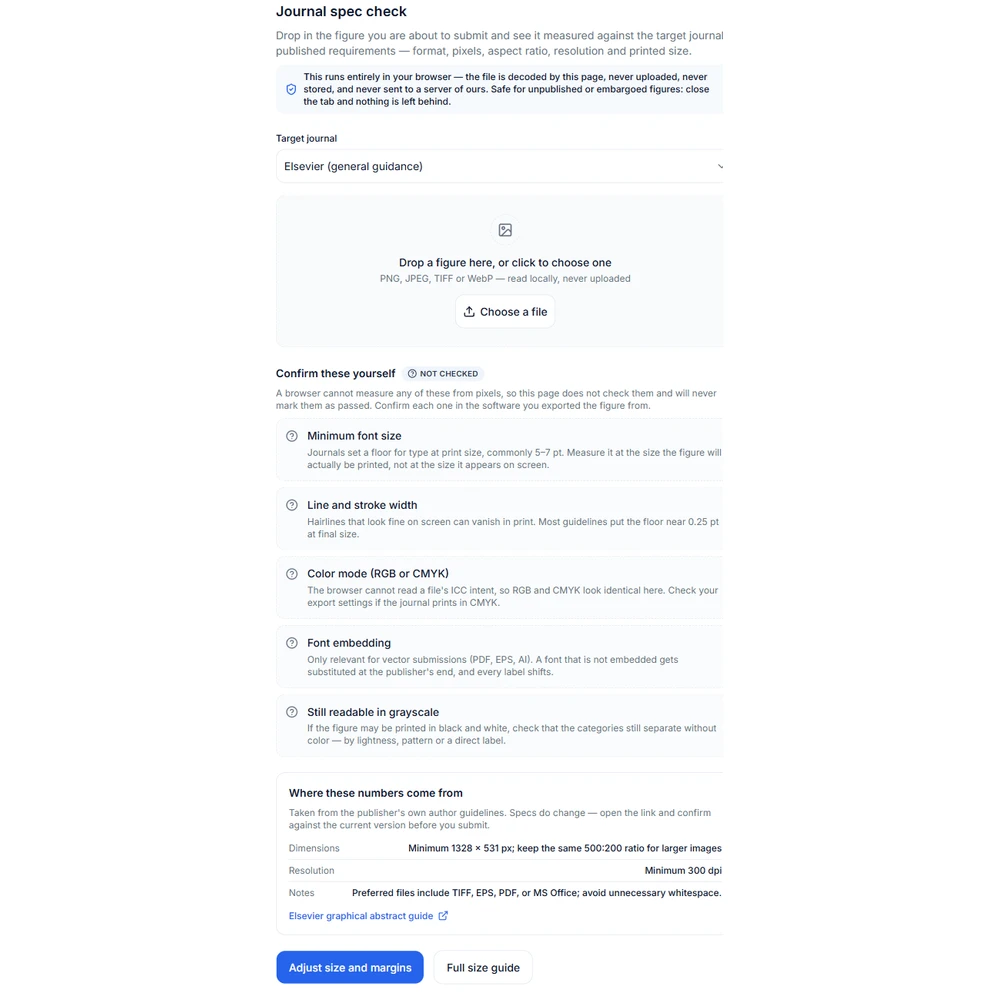
以下の項目はご自身で確認が必要です

未チェック

以下の項目はブラウザでピクセルから測定できないため、このページではチェックされず、「合格」と表示されることもありません。書き出し元のソフトウェアに戻って各項目を確認してください。

  • 最小フォントサイズ

    ジャーナルは通常、印刷サイズでフォントサイズが5〜7pt以上であることを規定しています。画面上の表示サイズではなく、最終的な印刷サイズで測定してください。

  • 線幅

    画面上では正常に見える細い線も、印刷すると消えることがあります。ほとんどの仕様では、最終サイズで約0.25pt以上の太さが要求されます。

  • カラーモード(RGBまたはCMYK)

    ブラウザはファイルのICCプロファイルを読み取れないため、RGBとCMYKはここでは区別できません。ジャーナルがCMYKで印刷する場合は、書き出し設定で確認してください。

  • フォントの埋め込み

    ベクター形式(PDF、EPS、AI)にのみ関係します。フォントが埋め込まれていないと、出版社側で置き換えられ、すべてのラベルがずれます。

  • グレースケール印刷後も判別可能か

    この画像が白黒印刷される可能性がある場合、色を除いても各カテゴリが判別できるか確認してください。明度、テクスチャ、または直接ラベル付けによって。

これらの数値の出典

出版社自身の著者向け指示から取得しています。仕様は変更される可能性があります。投稿前にリンクを開き、最新版と照合して再確認してください。

寸法
Minimum 1328 × 531 px; keep the same 500:200 ratio for larger images
解像度
Minimum 300 dpi
備考
Preferred files include TIFF, EPS, PDF, or MS Office; avoid unnecessary whitespace.
Elsevier graphical abstract guide

Multiple AI models

GPT Image 2, Nano Banana, Seedream 5, Flux 2 Pro and more — pick the right one per figure.

Up to 4K export

Render at 1K, 2K or 4K for print-ready manuscript output.

Text & sketch to figure

Start from a prompt, or refine a rough hand-drawn sketch.

Free to start

Free account in seconds — every figure is saved to your private history.

Figure spec check

What the report looks like

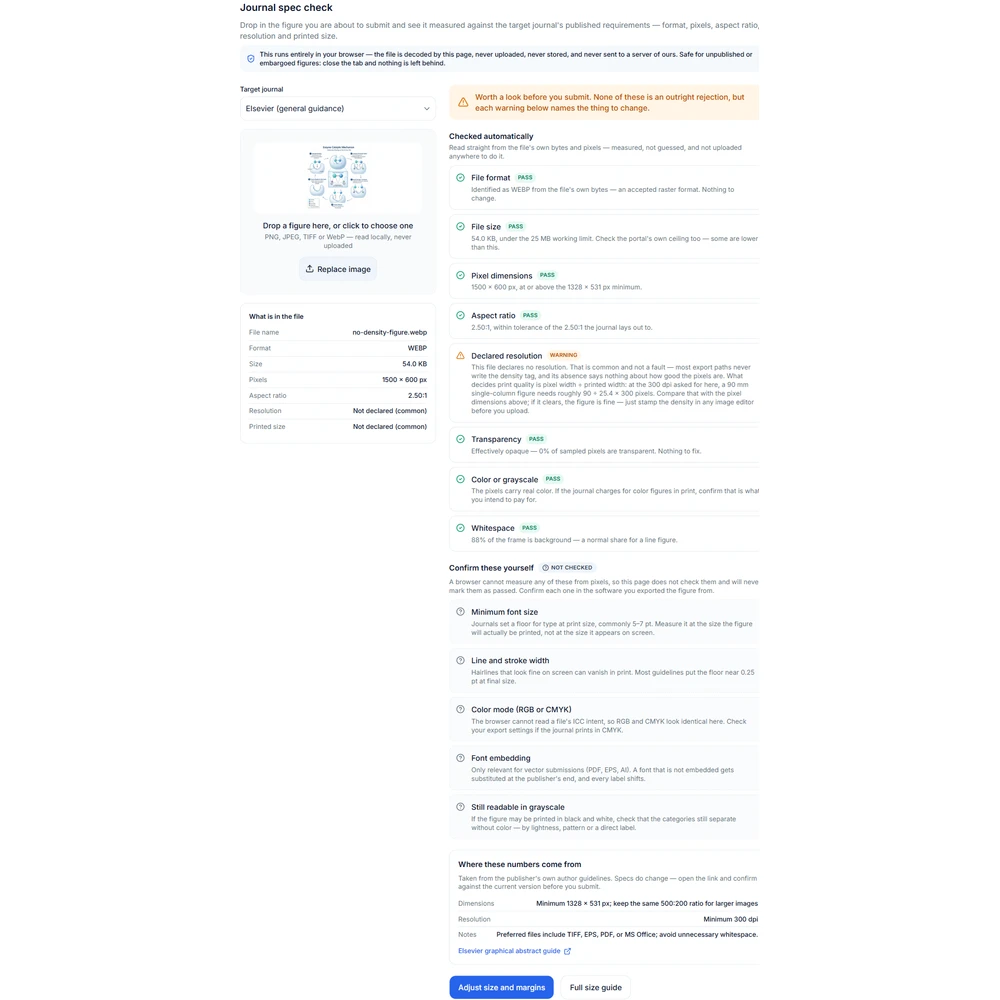
Screenshots of the checker itself, not generated artwork. The values shown come from one example file; your own report depends on the file you choose and the profile you select.

How the check works

Measured facts first, unmeasurable rules kept separate

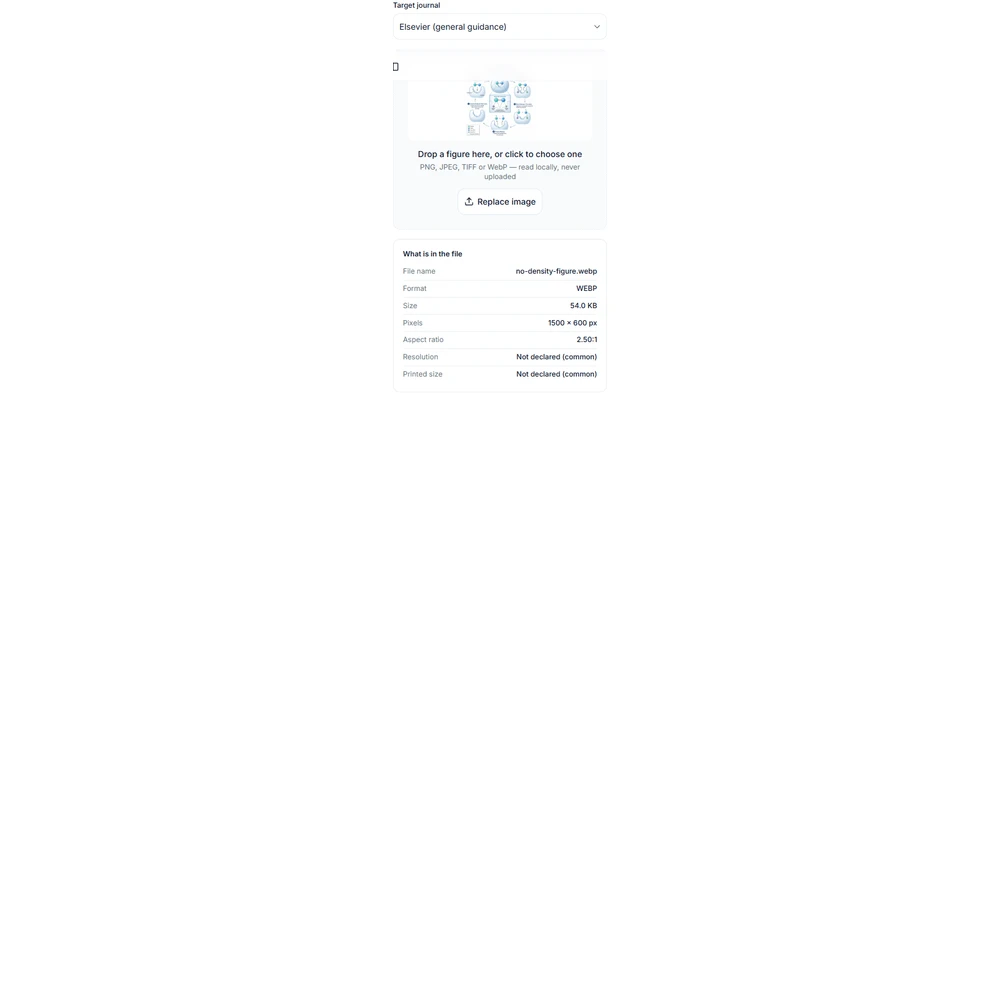
Figure spec check report showing warnings on resolution and aspect ratio1

What the browser can actually measure

The file is read as bytes and decoded locally. Pixel dimensions, aspect ratio and file size are exact. The format comes from the leading bytes rather than the filename, so a PNG renamed to .tif is still reported as a PNG. Color and transparency are answered statistically from a downsampled copy, which is enough for a yes-or-no question and keeps a very large file from filling a browser tab.

  • Pixel width and height, and the aspect ratio they imply
  • File format read from the leading bytes, not the extension
  • File size against a soft submission-portal ceiling
  • Declared resolution, and the physical size derived from it
  • Whether any pixels are transparent
  • Whether the artwork is effectively grayscale
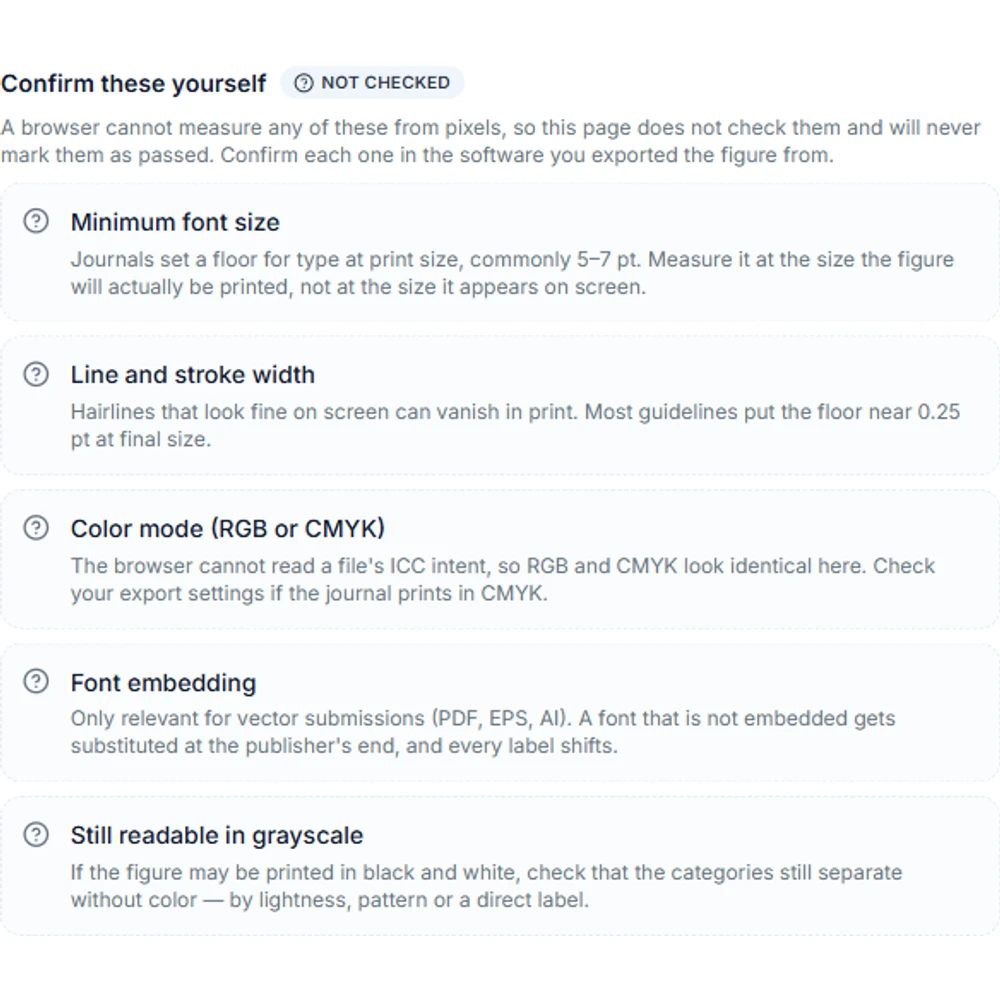
Confirm-by-hand group listing font size, stroke width, color mode, font embedding and grayscale print2

What it cannot measure, and says so

A raster image does not carry the information some submission rules need, so those rules are listed in a separate confirm-by-hand group instead of being marked green. Nothing in that group has been evaluated. Reading a green report as though it had cleared them is the one way this tool could send a figure to a desk reject with the author believing it had been checked.

  • Minimum font size — needs text recognition plus a physical conversion
  • Stroke width — the same problem, measured against the printed width
  • CMYK or color intent — the browser cannot read ICC rendering intent
  • Font embedding — a property of PDF and EPS artwork, not of pixels
  • Whether categories stay distinguishable after a grayscale print
Measured facts panel showing format, file size, pixel dimensions, aspect ratio and declared dpi3

A missing resolution is not a broken figure

Plenty of export paths never write a density tag, so the report often shows no declared dpi. That is a warning, not a failure, and it says nothing about whether the pixels are good enough. What decides print quality is pixel width divided by printed width in inches. A figure with no declared dpi and a generous pixel width is usually fine; one that declares 300 dpi but has few pixels is not. When a journal asks for a density value, set it in your export tool and check again.

  • Confirm dimensions, file format, and resolution
  • Review the target venue's AI-use policy
  • Complete a final expert review before use
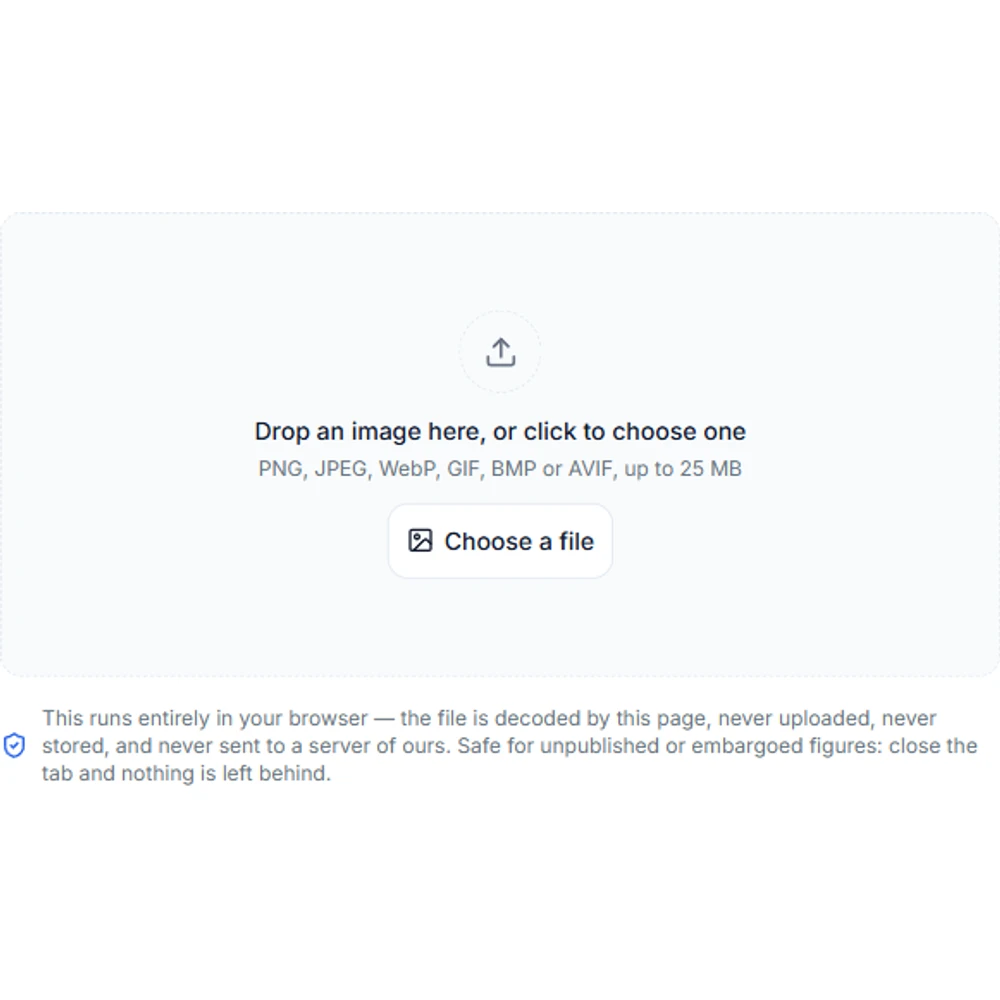
Figure spec check upload panel with a drop zone and a note that the file stays in the browser4

Where the journal numbers come from

Each profile is derived from the publisher requirements table on the graphical abstract size guide, which carries the official source link for every row. This page deliberately keeps no second copy of those numbers — a spec checker quietly enforcing last year’s rule is worse than none. Open the guide to read the requirement in the publisher’s own wording, and follow the source link before you rely on it.

  • Profiles are generated from the guide table, not typed in twice
  • Every report links back to the publisher source for the selected profile
  • A profile whose source row changes is dropped rather than guessed at

A pre-submission cross-check, not the journal rulebook

This report compares one file with one stored profile. It cannot see the current author guidelines for your journal, its production requirements, the rules for your specific article type, or any instruction an editor has given you. Requirements are revised and they differ between journals from the same publisher. Treat the report as a cross-check to run before submission, and confirm every item against the official author guidelines for the journal you are submitting to.

Figure spec check questions

Run the check before you submit

The spec check above is free, needs no account, and keeps your file on your machine. Sign in when you want the AI tools that fix what it finds.